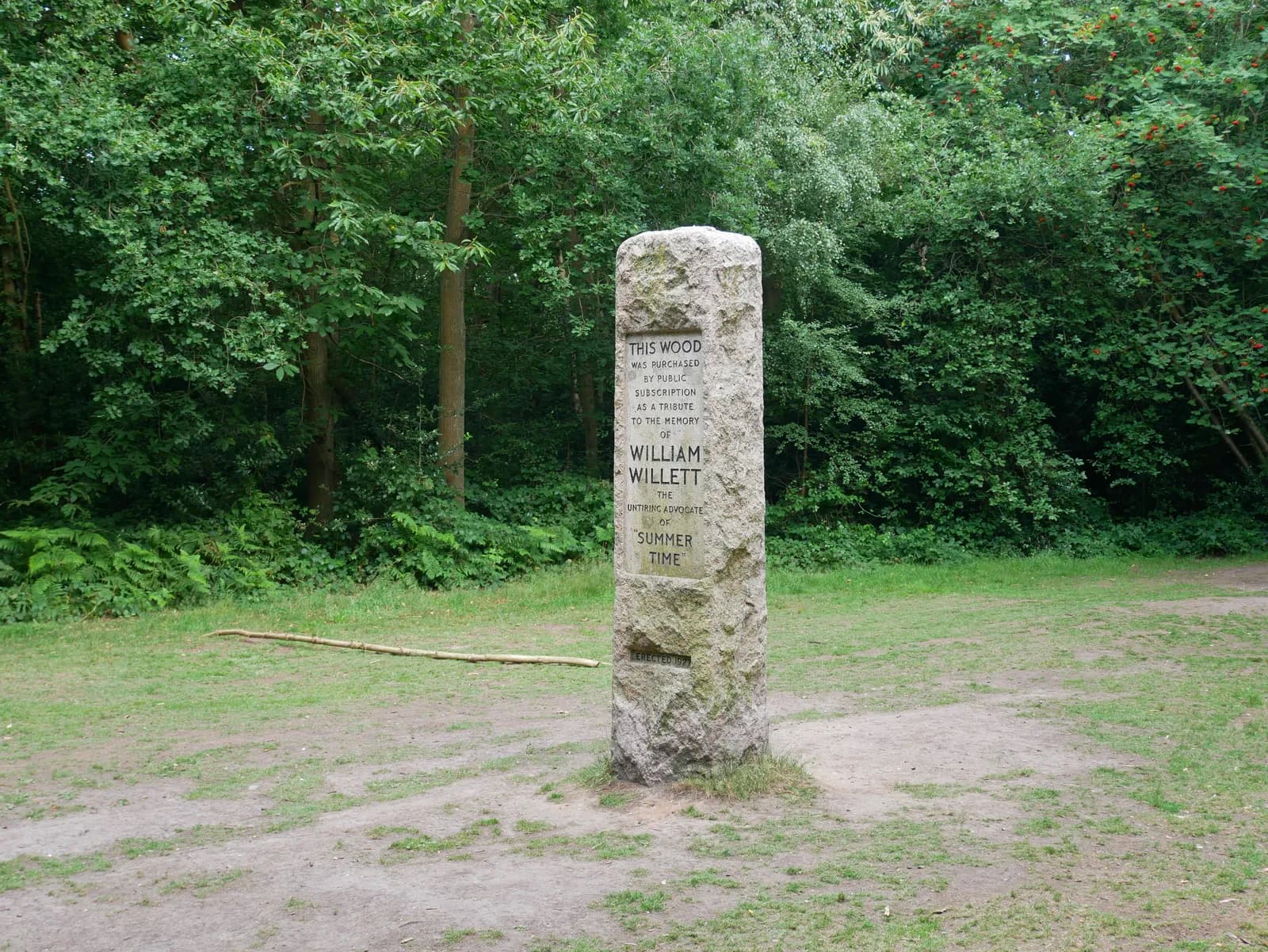
William Willett, a successful builder who spent most of his adult life in Chislehurst, spent nearly a decade campaigning for the idea that became British Summer Time. The concept came to him during an early morning ride through Petts Wood, and his persistence eventually changed how the nation keeps time.
A Builder's Early Life
William Willett was born on 10 August 1856 in Farnham, Surrey. He entered the family building business, Willett Building Services, and established a reputation for quality construction in Chelsea, Hove, and across London and the south-east. The firm became known for "Willett built" homes.
In 1890, Willett purchased the 124-acre Camden Place property near Chislehurst, though he sold it to the Chislehurst Golf Club four years later. He settled at "The Cedars" in Chislehurst, a house now marked with a blue plaque. He married twice: first to Maria Mills in 1879, with whom he had seven children, and after her death in 1905, to Florence Strickland in 1910, with whom he had one daughter.
The Morning Ride That Changed Time
The idea for daylight saving came to Willett during an early morning horse ride through Petts Wood near his Chislehurst home one summer. He noticed that while the sun had already risen, many household blinds remained down, meaning valuable daylight was going unused.
As an enthusiastic golfer, Willett also disliked having to cut short his rounds at dusk during summer evenings. He calculated that Britain was wasting 210 hours of daylight each year.
In July 1907, he published a pamphlet titled "The Waste of Daylight," which went through nineteen editions by March 1914. In it, he wrote: "Everyone appreciates the long light evenings. Everyone laments their shrinkage as the days grow shorter, and nearly everyone has given utterance to a regret that the clear bright light of early mornings, during Spring and Summer months, is so seldom seen or used."
The Campaign for Clocks to Change
Willett proposed advancing clocks by 80 minutes in four incremental steps of 20 minutes each at 2 am on successive Sundays in April, reversing the process in September. He calculated this would save £2,546,834 annually in lighting costs.
He argued: "Light is one of the great gifts of the Creator. While daylight surrounds us, cheerfulness reigns, anxieties press less heavily, and courage is bred for the struggle of life."
MP Robert Pearce introduced the first Daylight Saving Bill on 12 February 1908. Winston Churchill promoted the proposal. A parliamentary select committee examined the idea in 1909 but took no action. Willett continued campaigning at his own expense until his death.
Tragedy Before Triumph
Willett died on 4 March 1915 from influenza, aged 58. He was buried at St Nicholas' Churchyard in Chislehurst. He did not live to see his proposal become law.
Germany introduced daylight saving time first in 1916. Britain followed, passing the bill on 17 May 1916 under the Defence of the Realm Act. On 21 May 1916, clocks across Britain were advanced by one hour for the first time. The Summer Time Act of 1925 made the practice permanent.
Local Legacy in Bromley
The Bromley area contains multiple tributes to Willett's campaign. The Daylight Inn, a Grade II listed pub in Station Square, Petts Wood, was built in 1935 specifically to honour his achievement. Designed by Sydney Clarke in mock Tudor style, it originally included a ballroom and thirteen hotel rooms.
Willett Way and Willett Close are roads named in his honour. The Willett Recreation Ground in Petts Wood, home to Petts Wood Cricket Club, carries his name. Most notably, a memorial sundial stands in Petts Wood, permanently set to summer time. Unveiled in 1927 and designed by G.W. Miller, it bears the Latin motto "Horas non numero nisi aestivas" — I only count the summer hours.
Willett was also active in local Freemasonry, initiated into Camden Place Lodge in November 1906 and serving as Worshipful Master from November 1913. A family memorial also exists at St Wulfran's Church in Ovingdean, Brighton and Hove.
Among his descendants are John Willett, translator of Bertolt Brecht, and Chris Martin, lead singer of Coldplay.